I want to tackle some myths I’ve encountered about Dynamics 365 eCommerce and give clarity on these misconceptions. The Dynamics 365 eCommerce technology stack offers immense value but often doesn’t get the attention it deserves. One reason is that eCommerce requires specialized technical knowledge distinct from traditional ERP systems. AI, low-code platforms, and tools like Copilot are advancing rapidly. They enhance certain aspects of business operations. Nevertheless, they can’t easily replace the foundational processes of traditional ERP and eCommerce systems.
Myth 1: Dynamics 365 eCommerce will be drastically changed by Copilot/AI
Traditional ERP and eCommerce platforms handle complex tasks. These include inventory management, supply chain logistics, financial transactions, and customer relationship management. Dynamics 365 eCommerce is built with intricate business logic and industry-specific practices that need deep understanding and skills. AI can augment these systems by offering insights, automation, and predictive analytics. Nonetheless, it doesn’t replace the need for strategic planning and operational control that these platforms offer.
Selling products to customers involves more than just generating texts and automating tasks. It requires a nuanced approach to market trends. Understanding customer behaviors and creating personalized experiences are essential. These elements are deeply integrated into eCommerce platforms like Dynamics 365. AI can help in analyzing data and suggesting actions. Nevertheless, the core processes ensuring effective sales and customer satisfaction stay rooted in well-established processes and algorithms. Hence, it’s crucial to recognize the irreplaceable value of these traditional platforms even as we embrace new technologies.
Myth 2: Dynamics 365 eCommerce is only for large enterprises
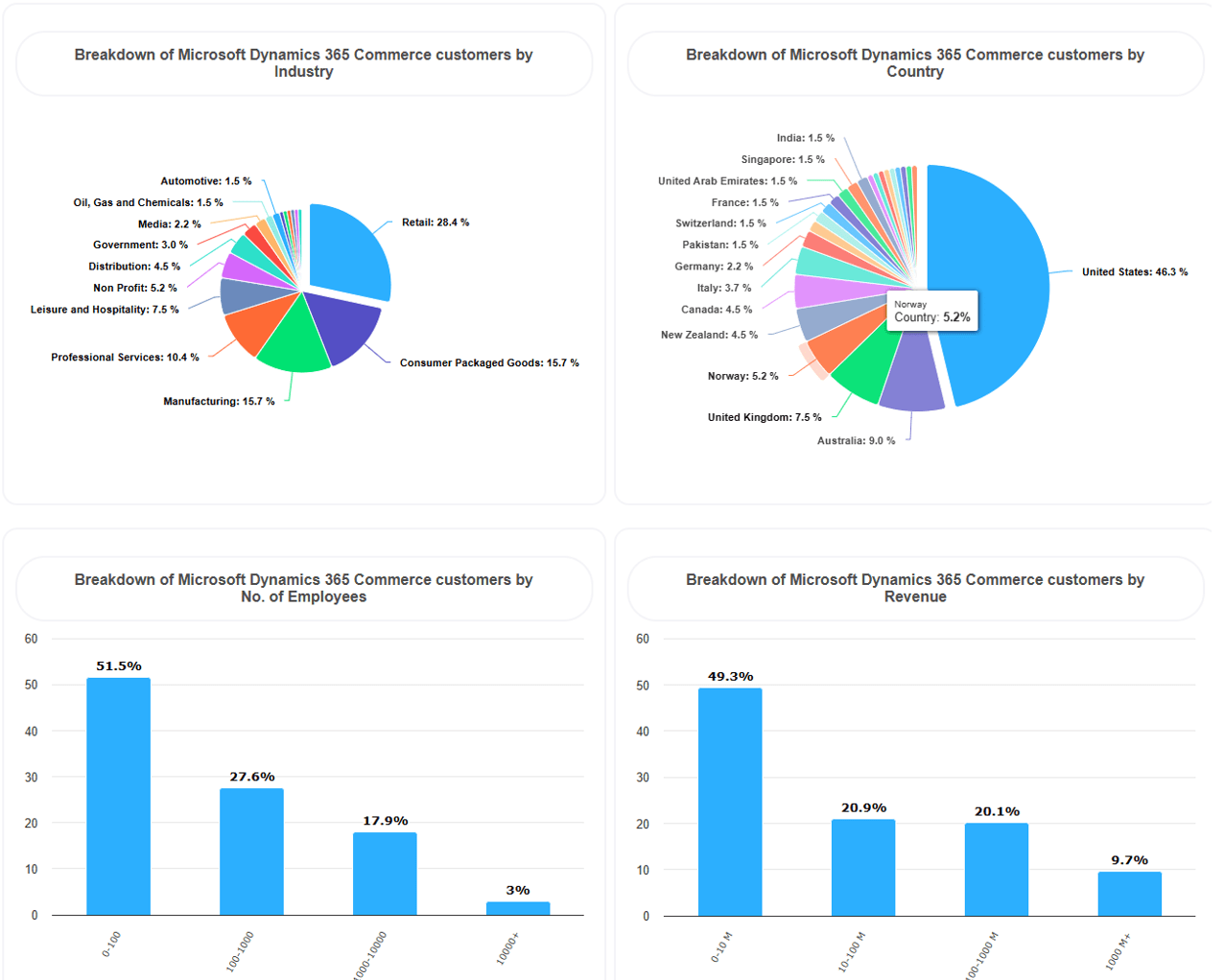
This is not true! Most eCommerce implementations I’ve been part of are with small to medium-sized businesses. I have yet to be involved in multi-country eCommerce implementation. Dynamics 365 eCommerce is designed to be scalable and adaptable for businesses of all sizes. It offers flexible deployment options. Its modular features can be tailored to meet the needs of SMBs. They can also cater to large corporations. The platform allows SMBs to start with core functionalities and expand as their business growth.
If you want a sneak peek to eCommerce customers, take a look at appsruntheworld. Here you can break down who is using eCommerce. By filtering a bit, you can even see the names.https://www.appsruntheworld.com/customers-database/products/view/microsoft-dynamics-365-commerce
Myth 3: The platform lacks customization and flexibility
In most eCommerce implementations, there’s a need to tailor the user experience according to the company and brand. Branding and marketing have become important aspects of eCommerce implementation. Businesses can change the user interface, create custom workflows, and develop personalized customer experiences.
A mid-sized b2b oriented customer customized the platform to show their unique brand identity. They integrated it with their existing inventory management system. This customization led to improved operational efficiency and a more cohesive brand experience for customers.
They used https://webflow.com/ to design a compelling eCommerce look that enhances branding and look-and feel. Dynamics 365 eCommerce supports extensions and integration’s with third-party applications, enabling companies to tailor it to their specific needs.
Myth 4: Integration with existing systems is difficult
Dynamics 365 eCommerce is built with interoperability in mind. It provides robust APIs, data connectors, and integration tools. These features help seamless integration with various systems such as CRM, ERP, payment gateways, and marketing platforms. This ensures that businesses can unify their operations without extensive redevelopment. I would encourage to take a look at the documentation and GitHub SDK samples to see how this is done.
Myth 5: Limited advanced analytics and AI capabilities
The platform includes advanced analytics and AI features that offer valuable insights into customer behavior, sales trends, and operational performance. Features like AI-driven product recommendations, customer segmentation, and predictive analytics help businesses make data-driven decisions and enhance customer engagement. Also, the roadmap is packed with more to come.
Myth 6: Dynamics 365 eCommerce is too expensive
An investment is involved. Nonetheless, Dynamics 365 eCommerce offers flexible pricing models. These include subscription-based plans that can align with different budget levels. The platform can improve efficiency. It can also increase sales and enhance customer experiences. These capabilities often lead to a significant return on investment (ROI) over time.
From my experience, customers choosing third-party eCommerce solutions often end up with limited and rigid integration’s. The irony is that if customers want to use Dynamics 365 Commerce together with a third-party eCommerce platform, they may end up paying double. If you’ve already invested in Dynamics 365 Commerce, you have the building blocks to use eCommerce as well. The eCommerce license is a strong offering when you delve deeper into it and evaluate the additional costs a third-party eCommerce solution would incur. See https://kurthatlevik.com/2023/05/02/d365-ecommerce-implementation-and-costs/ to get an idea of what to evaluate.
Myth 7: It doesn’t support true omnichannel B2B Commerce.
Dynamics 365 eCommerce is designed to offer a seamless omnichannel experience. It unifies online and physical channels. This setup allows customers to have consistent interactions across web stores, mobile apps, physical stores, and social media platforms. Features like unified pricing, wish lists, and customer profiles enhance the shopping experience regardless of the channel.
Dynamics 365 eCommerce can be used to integrate their online store with physical locations. Customers can check product availability in-store. They can buy online and pick up in-store (BOPIS). This ensured a consistent shopping experience. This process increases customer loyalty and sales.
Myth 8: Only IT experts can use and manage it
The eCommerce sitebuilder features an intuitive user interface that is user-friendly for individuals without advanced technical skills. The platform includes drag-and-drop tools, configurable templates, and guided workflows. Additionally, Microsoft provides comprehensive training resources and support to help users to learn effectively.
A small team with limited IT support can efficiently manage the Dynamics 365 eCommerce site. They can do this after a brief training period. This allows them to respond quickly to market changes and customer needs.
Deeper skills is needed in the design of the site (CSS). It is also needed when creating and extending modules (TypeScript). For more advanced functionality, an experienced C#/CRT developer is required. However, this is mostly a cost during the implementation period.
We also have customers that have implemented B2B eCommerce without any partner assistance.
Myth 9: Upgrades and maintenance are disruptive
Microsoft follows a continuous update model for Dynamics 365 eCommerce, delivering regular updates that include new features and security enhancements. These updates are designed to be non-disruptive. They reduce downtime. This ensures that businesses can gain from the latest advancements without significant interruptions.
Our customers notice that updates are applied seamlessly during off-peak hours. These updates have no impact on their day-to-day operations. This allows them to focus on serving their customers. In short, Dynamics 365 eCommerce offers true 24/7 uptime. Updating and adding new features do not cause downtime. This is due to the micro services architecture.
Along with the normal Dynamics 365 wave documentation and fixlists, eCommerce has a valuable GITHub. It provides eCommerce module enhancements and fixes.
Myth 10: It’s not suitable for global operations
Dynamics 365 eCommerce supports multiple languages and currencies and complies with various regional regulations and tax requirements. This makes it suitable for businesses looking to expand globally or run in multiple countries. We see international companies using Dynamics 365 eCommerce to launch localized websites for different regions. They accommodate local languages and payment options. This strategy helps them penetrate new markets effectively. The ability to distribute Commerce Scale Units (CSU) across multiple geographical data centers ensures excellent performance.
Myth 11: Security Measures are Inadequate
Security is a top priority for Dynamics 365 eCommerce. The platform includes advanced security features. These include data encryption and role-based access control. It also complies with international security standards like GDPR, ISO 27001, and PCI DSS. Regular security updates protect against emerging threats.
Regarding the platform, I have only noticed that the eCommerce sites were down. This was related to global Entra ID issues from Microsoft. The last few years, I think there have been less than 2 instances where our customers have been affected. The rest of the time, it works and is stable.
End note
We can truly recognize the robust capabilities of Dynamics 365 eCommerce. It has the potential to transform businesses of all sizes, once we debunk these myths. Dynamics 365 partners must invest more in expanding their knowledge. They need to enhance their expertise in Dynamics 35 eCommerce. This investment is crucial to effectively support and guide their clients. Specifically, B2B Dynamics 365 customers have tremendous opportunities to enhance their digital operations. They can reach new markets. They also have the chance to provide superior customer experiences. By embracing this platform, companies can integrate comprehensive eCommerce functionalities. They combine these with the strength of traditional ERP systems. This integration leads to increased efficiency. It fosters growth and provides a competitive edge in the market. And if you want to try it, go to https://commerce.trial.dynamics.com/welcome/index.html.
 Kurt Hatlevik - Dynamics 365 Blog